

A career transition is not the end of a professional journey. Sometimes, it can be the beginning of a different one.
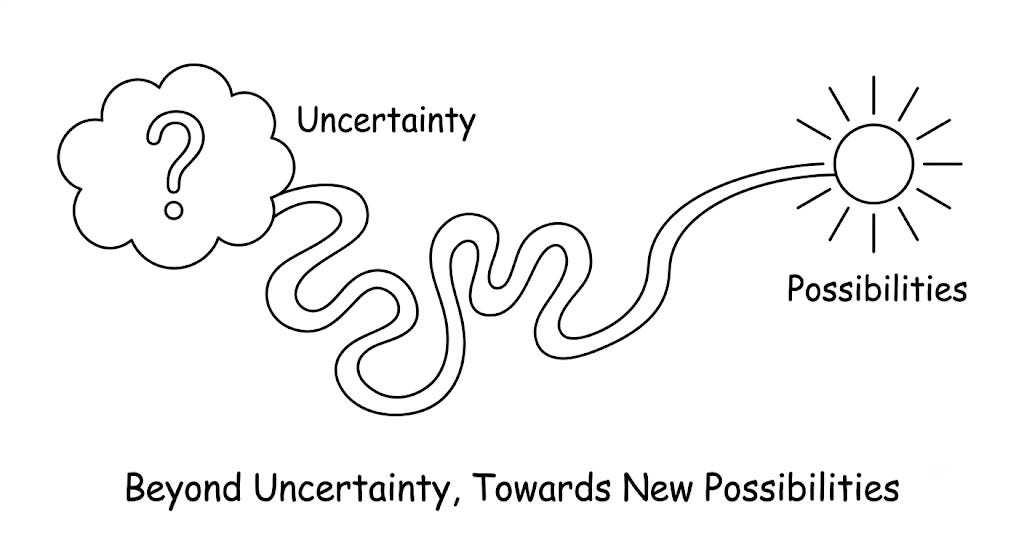
The professional landscape is constantly evolving. Organizations reassess priorities, business models change, new technologies emerge, and workforce requirements shift. As a result, layoffs and voluntary exit offers have become realities that professionals may encounter during their careers.
While layoffs are organizational decisions that affect employees’ continued employment, voluntary exit offers provide eligible employees an opportunity to consider leaving with a proposed exit package. Regardless of how a transition begins, the experience can bring uncertainty, difficult decisions, and questions about what lies ahead.
Behind every affected role is an individual with aspirations, family responsibilities, financial commitments, relationships, and a professional journey built over years of experience.
Whether you have experienced a layoff, are considering a voluntary exit, or anticipate a career transition, navigating this phase involves more than finding your next job. Taking time to reflect on your situation, knowing your strength, learning from others, exploring new opportunities and getting ready for the future will all be useful to move forward. Here are 5 key considerations to give you more confidence and clarity.
1. Understanding the Emotional Impact of a Career Transition
Losing a job or preparing to leave an organization can affect more than professional identity. It can influence confidence, emotional well-being, financial security, and family life.
Some professionals may feel disappointed, anxious, or uncertain about finding another opportunity. Others may question their capabilities or wonder whether their experience remains relevant. Those considering voluntary exit may also experience conflicting emotions while weighing the benefits and uncertainties of their decision.
These feelings are natural. There is no single right way to respond to a career transition. It is very important that you give yourself time to process the change.
Remember that a change in employment status does not diminish the value of your experience, skills, contributions, or professional journey.
Years of solving problems, managing projects, supporting customers, mentoring colleagues, and delivering results remain valuable assets.
Your job title may change, but the capabilities you have developed do not disappear.
Take the time you need to regain perspective and gradually consider your next steps.
2. Look Beyond Your Job Title: Recognize Your Transferable Skills
One of the most valuable exercises during a career transition is identifying capabilities beyond your current designation.
A software engineer may have analytical, mentoring, and project coordination skills. A project manager may bring stakeholder management, business analysis, and leadership experience. A finance professional may have expertise in business planning, risk assessment, and data interpretation.
These capabilities can be valuable across industries and job functions.
Instead of asking only, “Which job can I get with my current designation?”, ask:
“What problems can I solve with the skills and experience I have developed?”
Look back at the projects you have delivered, challenges you have resolved, improvements you have introduced, and people you have mentored. These experiences can help you identify strengths that may not be immediately apparent from your job title.
Your next role does not necessarily have to replicate your previous one. Explore opportunities where your existing strengths can create value, even if the industry, designation, or responsibilities are different.
3. Upskill, Reskill, and Prepare for New Opportunities
Once you understand your existing strengths and identify potential career directions, consider the additional skills that could help you move forward.
Technology, automation, artificial intelligence, and changing business needs are transforming the workplace. Continuous learning can help professionals remain adaptable and prepared for evolving opportunities.
Consider strengthening your capabilities in:
Digital and AI skills: Understand emerging technologies and learn to use AI tools productively.
Data and analytics: Develop skills in interpreting information and making informed decisions.
Communication and leadership: Improve presentation, negotiation, stakeholder management, and mentoring skills.
Business understanding: Explore strategy, customer experience, financial fundamentals, and operational efficiency.
Industry knowledge: Understand emerging opportunities in industries beyond your current domain.
You do not need to learn everything at once. Choose learning priorities based on the roles you want to pursue. Start with a couple of relevant skills, work on practical projects, and demonstrate how you can apply your learning.
The objective is not simply to collect certificates. It is to become more adaptable and capable of contributing in different professional environments.
Strengthen Your Professional Profile
Alongside developing new skills, ensure your professional profile effectively communicates your experience and capabilities.
Use this time to:
Update your resume with recent achievements, responsibilities, and measurable contributions.
Refresh your LinkedIn profile to reflect your current skills and professional interests.
Highlight transferable skills and relevant projects.
Build a portfolio or document practical examples of your work, wherever applicable.
Reconnect with professional contacts, mentors, and former colleagues.
Prepare examples of your achievements and contributions for interviews.
Your professional profile should communicate not just what you have done but also the value you can bring to future opportunities.
4. Build Emotional Resilience, Adaptability, and Self-Awareness
Career transitions can test our emotional strength and ability to adapt. Developing greater self-awareness and resilience can help us navigate uncertainty and make thoughtful decisions.
Use this phase to strengthen qualities that are valuable across roles and industries:
Self-awareness: Recognize your strengths, emotions, and areas for improvement.
Resilience: Develop the ability to recover from setbacks and approach new situations with patience and confidence.
Adaptability: Be open to different roles, industries, technologies, and ways of working.
Empathy: Understand different perspectives and maintain supportive professional relationships.
Decision-making: Evaluate opportunities objectively rather than allowing fear or pressure to drive decisions.
Communication: Express your thoughts clearly, listen actively, and build meaningful connections.
It is also important to maintain a balanced routine during this period. Make time for learning, networking, personal responsibilities, and activities that support your well-being.
You may encounter setbacks, unanswered applications, or periods of uncertainty. These experiences can be discouraging, but they do not define your professional potential.
You do not have to make every decision immediately. Take one step at a time, remain open to learning, and recognize the progress you make along the way.
5. Voices from the Transition: Remember, You’re Not Alone
Every career transition is different. While some people find new opportunities quickly, others take more time to reassess their direction, explore possibilities, or discover what they truly want from their next chapter.
Hearing from people who have experienced similar situations can offer reassurance, perspective, and encouragement. Their stories remind us that career transitions are personal journeys, and there is no single path or timeline for moving forward.
“I’m able to offset some of that heavy impact because I’ve kept building. Creating things, reaching out to people, and talking about my work keeps me moving forward.”
— Ashish, Senior Technical Writer
“What surprised me most was the support I received from people I had worked with over the years. Former colleagues reached out, shared opportunities, and offered encouragement. Those conversations made a difficult period much easier.”
— A Senior Manager who experienced a voluntary exit
“Initially, I didn’t know what to do next. There were so many questions running through my mind. With time, I realized I didn’t have to figure everything out immediately. Taking things one day at a time helped me regain my confidence.”
— A Software Engineer impacted by a layoff
These experiences remind us that a career transition does not have to be navigated alone. It can be very helpful to talk to other people and gain advice from them. Knowing that others have been through similar uncertainty but have found ways to move forward can give you strength in your situation.
A Note for Organizations and Leaders: Supporting Employees with Empathy
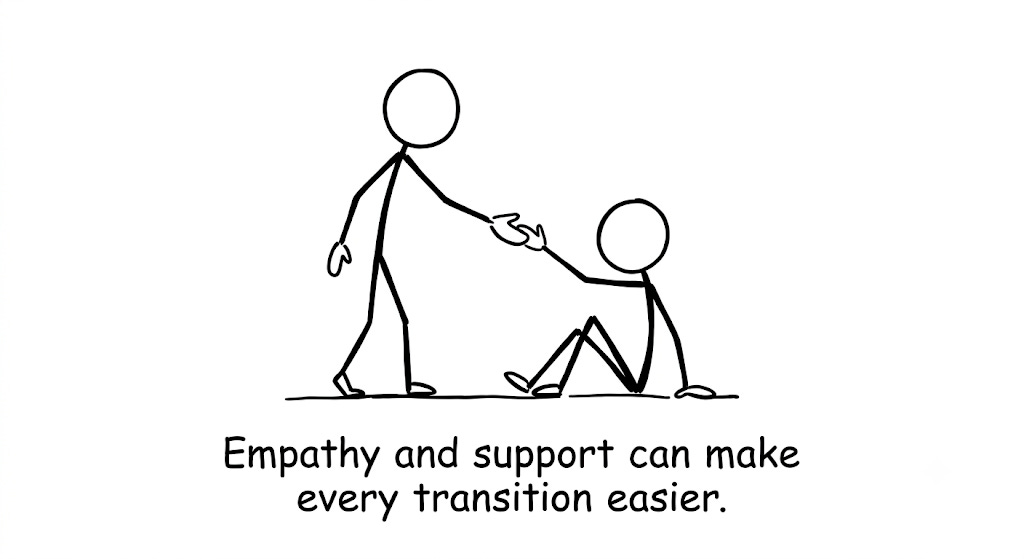
During layoffs and voluntary employee exits, the way organizations and leaders support affected employees can make a meaningful difference. Beyond formal severance packages, organizations can consider additional support measures, where feasible and consistent with applicable policies:
Allowing employees to retain company-issued laptops, subject to security policies.
Extending medical insurance coverage, where possible.
Providing career counselling, resume assistance, and interview preparation.
Offering outplacement support and professional networking opportunities.
Providing timely experience letters and separation documentation.
Supporting referrals and recommendations for suitable opportunities.
Extending employee assistance and mental well-being support.
Not every organization can offer all these benefits. Nevertheless, thoughtful communication and even a few meaningful measures can ease the transition.
A genuine referral from a former manager, timely documentation, or continued access to career support can make a meaningful difference.
Empathetic leadership is reflected not only in how organizations welcome people but also in how they support them when professional journeys come to an end.
Closing Thoughts: Your Career Is Bigger Than One Organization
A career transition can be challenging, and moving forward may take time. Whether you have been impacted by a layoff, accepted a voluntary exit offer, or are preparing for a possible change, it is natural to have questions about what comes next.
You do not have to figure everything out immediately. Start by understanding your strengths, taking care of your immediate priorities, reconnecting with your professional network, and exploring opportunities that align with your experience and aspirations.
Your next opportunity may be in the same industry, a different domain, consulting, entrepreneurship, teaching, mentoring, or an entirely new professional path.
Remember:
Your designation is not your identity.
Your employment status does not determine your professional worth.
Your experience and capabilities remain valuable.
Your career is not defined by one organizational decision.
Keep learning. Keep connecting. Keep exploring.
You may not always know what lies ahead, but each step you take to understand your strengths and get ready for new opportunities can help you keep moving forward.
A Message to Our Readers
Have you experienced a career transition, voluntary exit, or professional reinvention?
Whether it was a challenge you faced, a lesson you learned, support you received, or an opportunity you discovered, share your experience in the comments. Your story may help someone else get through an uncertain phase with greater confidence.
Together, let’s build a professional community that values empathy, continuous learning, adaptability, and new beginnings.
See you next Thursday,
Prasad Rao
Hey, Prasad here. I’m the voice behind the weekly newsletter Big Tech Careers. I share practical strategies for Big Tech interviews, behavioral storytelling, technical careers, and professional growth every Thursday.
New to Big Tech Careers? Subscribe to join a tribe of 37k+ and level up alongside engineers and architects.
Yes , I have gone through redundancy in my life.
And immediately judged myself - if I was not good enough. Clearly, it was not a case of low performance accordingly to the company. But the impacts were too many.
(Or may be even now , as I said I have been through it - its also on the likes of abuse , trauma etc - you need to get through it. )
I had only few months to get another offer before moving back. I didnt hesitate to go back because it was bad but what if I pushed a little bit more- that was my question . I would say this lesson has laid a more emotional experience for life than just as a one off. I would say a bit traumatic too.
Financial set backs was a profound effect of this and indeed plays more vital role.
But you know what , things turned around for me - I got help from people who were not even close to me , from people whom I thought would not even care , I also ensured to constantly re-invent my skills paying close attention in what I really was good at and what I wasnt - I didnt disagree with it , I agreed with it and changed my course of action. Yes , that's what I did & finally it happened.
I got an offer - Not much , not less - but just the right - for me to have hope & instill hope in others too may be!!!
Thank you Prasad , always.
Good article, it was important to say
This might sound a bit selfish, but I wasn't made redundant in the latest Canva layoffs.
But still it impacted me and my team
You feel sad and guilty because you outlasted your colleagues. Should I be happy for them because of package they received? Maybe, I don’t know
I'm happy to stay, but I'm also worried about the future