

Many professionals believe that having a mentor is an important step towards career growth. They seek out senior leaders, join formal mentoring programs, or approach experienced colleagues for guidance.
But finding a mentor does not automatically translate into professional growth.
You can have regular conversations with an experienced professional, receive valuable advice, and still see little change in how you approach your work or career. Why?
Because the real value of mentorship does not lie in having someone to guide you. It lies in knowing what to learn, asking the right questions, applying what you learn, and taking ownership of your development.
As professionals progress in their careers, they encounter challenges that go beyond technical knowledge and individual performance. Navigating organizational dynamics, influencing stakeholders, making career decisions, managing teams, and developing leadership capabilities often require insights that come from experience.
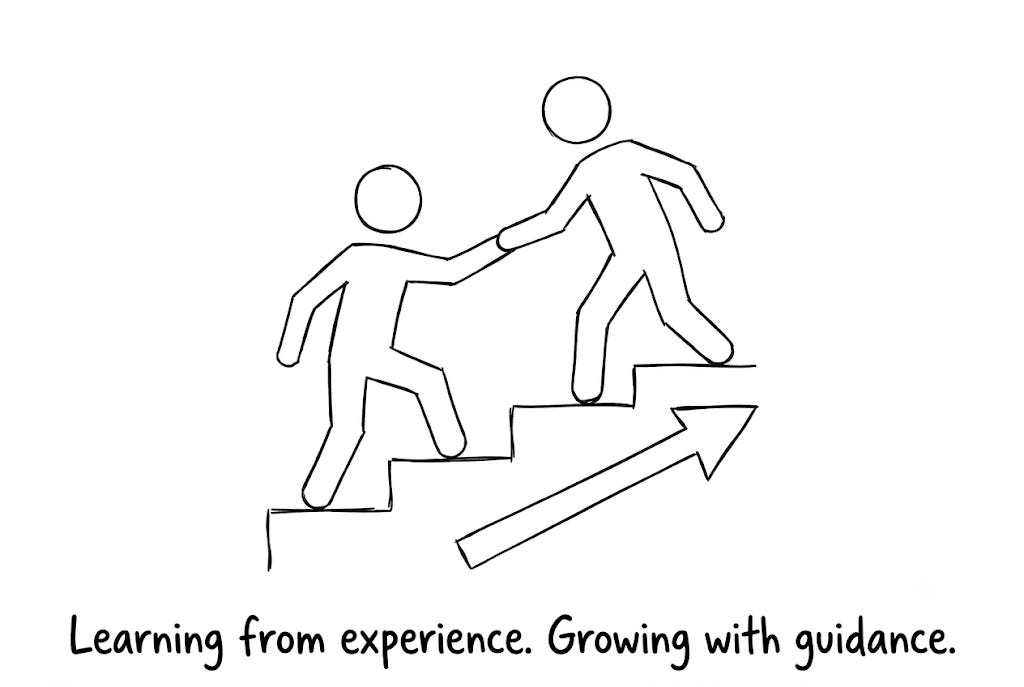
A good mentor can offer a perspective that books, training programs, and online resources often cannot. They help you recognize patterns, question assumptions, identify blind spots, and approach professional challenges with greater clarity.
However, finding a mentor is only the beginning. The real value lies in building a relationship that encourages continuous learning and translates experience into professional growth.
1. Start with what you want to learn, not whom you want to approach
One common mistake professionals make is starting with the person rather than the purpose. They identify a senior leader or someone with an impressive career and immediately think, “This is the person I need as my mentor.”
But before approaching anyone, ask yourself: What do I want to learn?
Your development needs could include improving leadership capabilities, influencing stakeholders, developing business acumen, navigating organizational dynamics, preparing for a management role, or making better career decisions.
These objectives may require guidance from different people.
For instance, a technically strong professional aspiring to become a business leader may benefit from learning how experienced leaders connect technology decisions with business outcomes. Similarly, someone moving into people management may gain more from a leader who has successfully built teams and managed performance challenges.
You do not need a perfectly defined career plan. However, understanding the capabilities you want to develop will help you identify people whose experience is relevant to your journey.
2. Look beyond designations when identifying a mentor
A mentor does not necessarily have to be your manager, the most senior person in your organization, or someone with an impressive professional profile.
Look for people who demonstrate qualities you want to develop. Observe how they approach problems, handle disagreements, communicate with stakeholders, make decisions, and build relationships across teams.
Often, the most useful mentor is someone one or two steps ahead of you rather than someone ten steps ahead.
Why? Because they have encountered similar challenges relatively recently and can relate to what you are experiencing. Their advice is likely to be practical, relevant, and relatable.
For example, someone who consistently brings clarity to complex discussions may help you improve your communication skills. A leader who builds strong teams may offer valuable lessons in people management.
Potential mentors can be found among colleagues, former managers, people from other teams, alumni networks, industry forums, or professionals you meet through industry events and networking communities.
Remember, you do not need one person to guide every aspect of your career. Different mentors can support different development needs, providing a broader range of perspectives.
3. Don’t ask someone to be your mentor. Start with a meaningful conversation.
Approaching someone you admire can feel uncomfortable, particularly when they are senior or have demanding schedules.
A common approach is to send a message asking, “Would you be my mentor?”
Although well-intentioned, this request can be difficult to respond to. It asks someone to commit to an undefined relationship without knowing what you expect or how much time it might require.
A better approach is to start small and be specific.
A thoughtful first message should explain why you have approached that person, what you want to learn, and what guidance you are seeking.
For example:
“I have been following how you approach business and technology discussions, particularly the way you connect technical decisions with business priorities. I am working towards developing that capability and would value your perspective. Would you be open to a 20-minute conversation sometime in the next couple of weeks?”
This demonstrates genuine interest, a clear learning objective, and respect for their time.
The first conversation should not be about securing a long-term commitment. It should be about starting a meaningful professional interaction. If the conversation goes well, the relationship can gradually develop into something more structured.
4. Take ownership of every mentoring conversation
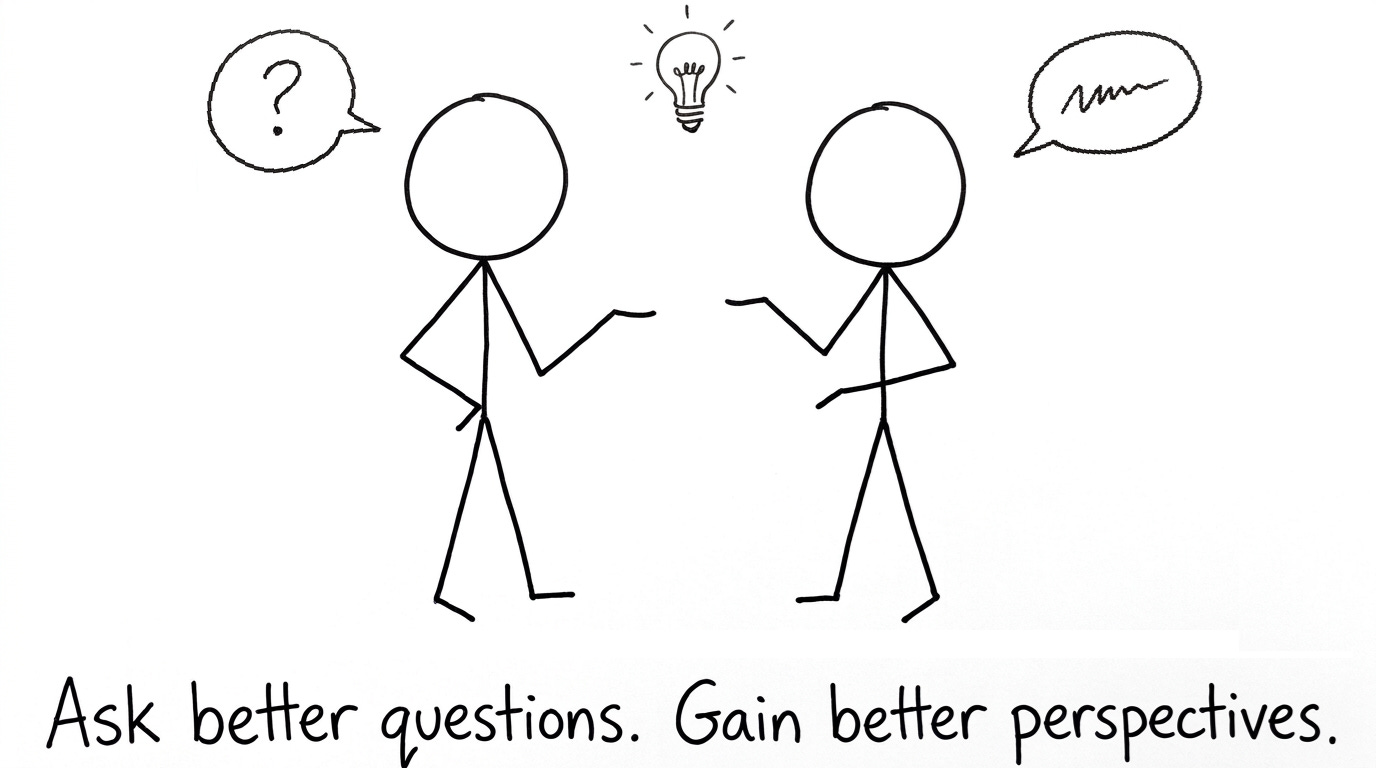
One reason mentoring relationships lose momentum is the expectation that the mentor will drive the process.
A successful mentoring relationship requires the mentee to take ownership of their learning.
Before every conversation, identify what you want to discuss. Bring a real workplace situation, a decision you are struggling with, or a capability you want to improve.
Instead of asking, “How can I become a better leader?”, consider asking:
“I recently had a disagreement with a peer team over delivery priorities. I explained my team’s constraints, but the discussion did not move forward. How would you have approached the conversation differently?”
The second question gives the mentor something specific to reflect on and creates an opportunity to discuss communication, stakeholder management, and leadership behavior.
You will generally gain more from discussing one real challenge in depth than asking several broad questions.
Also, prepare your own perspective. Explain what you have considered, what you have already tried, and where you are uncertain. Mentors are more likely to offer valuable guidance when they see that you are actively thinking through the problem.
5. Listen for the experience behind the advice
The greatest value of mentorship is not necessarily the answer a mentor provides. It is the experience and reasoning behind that answer.
An experienced professional may have encountered similar situations across different organizations and stages of their career. They can help you understand what tends to work, what commonly goes wrong, and what you may be overlooking.
Pay particular attention when a mentor challenges your assumptions or offers feedback that is uncomfortable to hear.
Perhaps you are technically strong but struggle to influence senior stakeholders. You may deliver excellent results but find it difficult to delegate. Or you may avoid difficult conversations, limiting your effectiveness as a leader.
These are precisely the areas where a mentor can help you recognize blind spots.
Instead of becoming defensive, ask questions such as:
What do you think I am overlooking?
Where do you think I could improve?
What would you have done differently in my position?
Remember, a mentor’s advice is an input, not an instruction. Their recommendations are shaped by their experiences and personal perspectives. The objective is not to become a copy of your mentor but to develop your own judgement.
6. Convert advice into action
This is arguably the most important aspect of a successful mentoring relationship.
Listening to an experienced professional can be inspiring, but advice has limited value if it does not translate into changes in how you work.
Suppose your mentor suggests involving stakeholders earlier in important decisions. Identify an upcoming project where you can apply this advice.
Similarly, if they recommend improving your executive communication, look for opportunities to present updates, simplify complex messages, and communicate business outcomes more effectively.
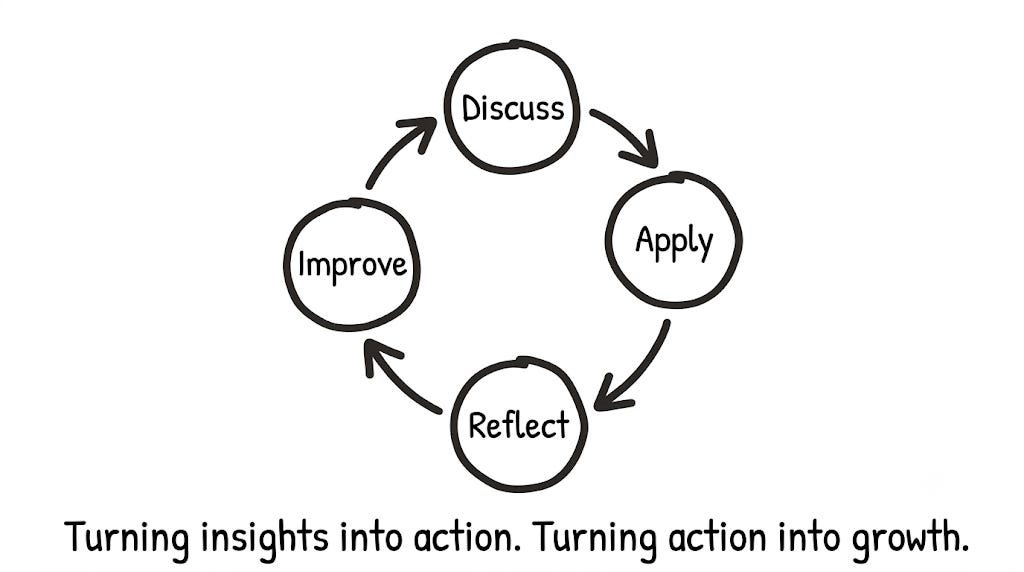
A useful way to approach mentorship is through a continuous learning cycle:
Discuss: Share a real challenge and understand your mentor’s perspective.
Apply: Identify practical actions and implement them.
Reflect: Evaluate what worked, what did not, and what you learned.
Improve: Discuss the outcomes and identify further opportunities to develop.
At your next meeting, share what happened. Did the new approach improve stakeholder alignment? Did you encounter resistance? What would you do differently? Agree on specific actions, set timelines for implementation, and decide when to review the outcomes. Wherever possible, define measurable indicators of progress. For instance, if you are working on improving stakeholder alignment, you could assess whether decisions are being reached faster, fewer issues are escalating, or there is greater agreement across teams. Keep these discussions constructive and focused on what worked, what needs improvement, and what you can do differently going forward.
One simple practice can strengthen the relationship: follow up after every meaningful conversation. A short message explaining how you applied the advice and what you learned demonstrates that you value the mentor’s time.
It also encourages more meaningful conversations in the future.
7. Make the relationship valuable for both sides
Mentorship should not become an endless series of requests for advice.
Respect your mentor’s time. Be punctual, prepare for meetings, follow through on commitments, and communicate if you need to reschedule.
Acknowledge their contribution and share your progress. You can also bring fresh perspectives, industry developments, or insights from your own professional experiences.
Allow the relationship to develop naturally. Not every interaction needs to be a formal career discussion. Building professional trust and showing genuine interest in each other’s experiences can make the relationship more meaningful.
As you gain experience, look for opportunities to mentor others. You do not have to be a senior leader to make a difference. There may be colleagues navigating challenges you have already faced.
Sharing what you have learned creates a professional culture where knowledge and experience are passed on rather than remaining with individuals.
The real measure of a successful mentoring relationship
A mentor cannot guarantee a promotion, make difficult career decisions on your behalf, or remove every obstacle you encounter. Their real contribution lies in helping you see situations differently, recognize opportunities, understand potential risks, and make informed decisions.
Do not measure the success of mentorship by how frequently you meet, how senior your mentor is, or how many pieces of advice you receive.
Measure it by what changes in the way you think, work, communicate, make decisions, and approach your professional growth.
A good mentor can help you see possibilities you may not have recognized on your own. But turning those possibilities into progress is your responsibility.
One final thought: You do not need to wait for a formal mentoring program or the perfect mentor to begin learning from others. Identify one professional whose experience you value, think of one meaningful question, and start a conversation. Sometimes, a single conversation followed by the willingness to act on what you learn can become the beginning of a relationship that shapes your professional journey for years to come.
See you next Thursday,
Prasad Rao
Hey, Prasad here. I’m the voice behind the weekly newsletter Big Tech Careers. I share practical strategies for Big Tech interviews, behavioral storytelling, technical careers, and professional growth every Thursday.
New to Big Tech Careers? Subscribe to join a tribe of 37k+ and level up alongside engineers and architects.