Hey, Prasad here 👋 I’m the voice behind the weekly newsletter “Big Tech Careers.”
This week I bring you a guest post from Vamsi Narla, Founder, Revarta and ex-Director Engineering and Product, Remitly
Vamsi has conducted over 1,000 interviews across all levels over the last decade and is going to share where people lack in preparing for high-stakes interviews and why he built Revarta, an AI-powered live interview practice platform.
If you like the article, click the ❤️ icon. That helps me know you enjoy reading my content.
I’ve been on the other side of the table for 1000+ interviews across levels and roles after more than a decade hiring at Google and Remitly. Here’s what I keep seeing:
Talented people who fail interviews they should pass.
Not because they lack skills. Not because they’re unqualified. But because they can’t articulate their experience under pressure.
They know what they should say. They’ve prepared. They understand the frameworks. But when the interview starts, something breaks down.
The key takeaway over years of interviewing has been: Understanding interview frameworks and executing them under pressure are two completely different skills.
What Veritasium Taught Me About Mastery
There’s a video by Derek Muller from Veritasium called “The Expert Myth“ that completely changed how I think about skill development.
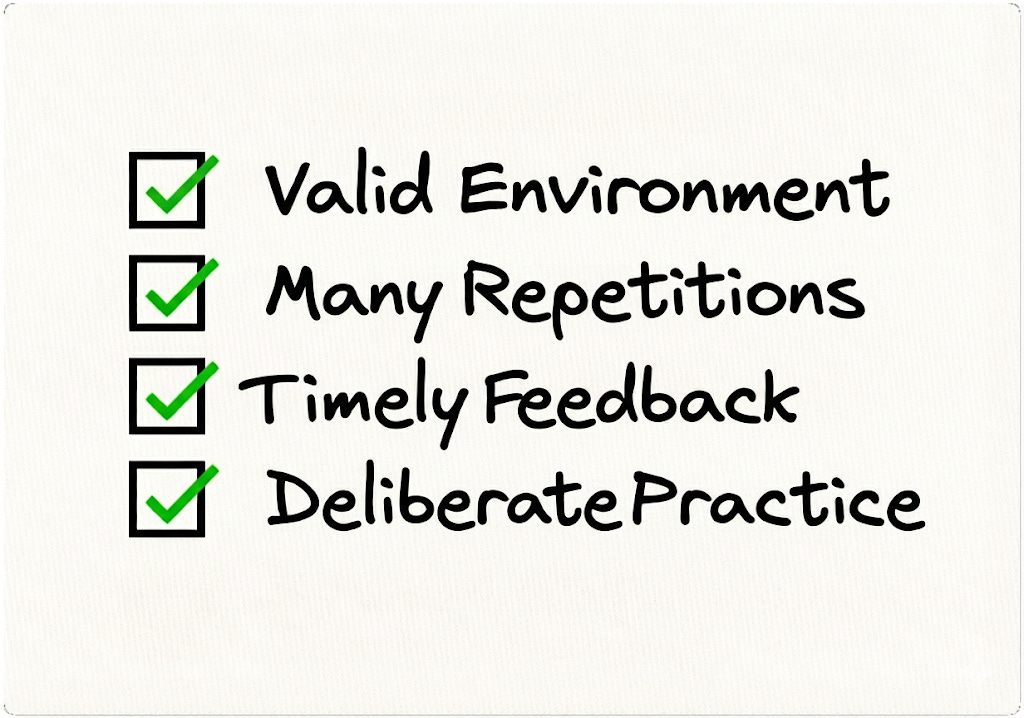
He breaks down what actually creates expertise in any field. It’s not just time or effort. It’s four specific ingredients:
1. A Valid Environment
The field needs to have clear cause-and-effect relationships where actions reliably lead to predictable outcomes. If the domain has too much randomness, bias, or inconsistency, you can’t develop true expertise no matter how hard you try.
For interviews: Interviews are a valid environment because:
Hiring managers consistently assess similar competencies (leadership, problem-solving, communication)
Behavioral questions follow predictable patterns and themes
Good answers share recognizable structural elements
The same frameworks (STAR format, Three Pillars) work across companies
Cause and effect is clear: demonstrate scope/impact/leadership → positive signal
The patterns are learnable. The feedback is consistent. This is what makes interview expertise possible.
Contrast this with: Stock picking (too random), predicting election outcomes (too many variables), or social media virality (inconsistent patterns). In those domains, even experts struggle because the environment isn’t valid.
But interviews? The environment is valid. You can get better through practice because the rules are consistent.
2. Repeated Attempts
You need multiple opportunities to try the skill, fail, learn, and try again. Expertise requires volume.
For interviews: Here’s the problem. Real interviews don’t offer repetition.
You might get 3-5 interviews in a job search. Each one is high-stakes. By the time you figure out what works, you’ve already failed the opportunities that mattered.
I interviewed at 8 companies before I joined Remitly. Each rejection taught me something. But I learned through failure in situations that actually cost me opportunities. I wish I’d had a way to fail safely, repeatedly, before the stakes were real.
This is what most interview prep is missing: A safe environment where you can attempt interviews 10, 20, 50 times without consequences.
3. Timely Feedback
Repeated attempts only create improvement if you get specific feedback on what to change.
Derek’s key insight: “Repeated attempts with timely feedback in a valid environment are essential for expertise development.”
For interviews: Most people don’t get feedback.
They read articles, take courses, and understand concepts. But they don’t know how THEY specifically sound when answering questions.
Is your answer too long or too short?
Are you emphasizing the right elements?
Did you actually demonstrate scope and impact, or just mention them?
How did you handle that follow-up question?
What did the interviewer actually hear vs. what you thought you said?
Without feedback on your actual performance, you’re practicing blind. You might be reinforcing bad habits without realizing it.
Most people discover their weaknesses in real interviews—when it’s too late to fix them.
4. Deliberate Practice
This is the hardest ingredient and the one most people skip.
Deliberate practice means:
Working at the edge of your current ability (not in your comfort zone)
Focusing on specific weaknesses, not just practicing what you’re already good at
Pushing through discomfort
Iterating on the same skill until excellence becomes automatic
Derek says: “Most experts do not continuously improve because they prefer to stay in their comfort zone rather than engaging in deliberate practice.”
For interviews:
Reading about STAR format is comfortable.
Watching videos is comfortable.
Writing answers on a worksheet is comfortable.
Speaking out loud? Uncomfortable.
Getting challenged with follow-up questions? Uncomfortable.
Hearing yourself ramble and having to do it again? Very uncomfortable.
But that discomfort is where growth happens. That’s where frameworks move from your head to your muscle memory.
The Two Stages of Interview Preparation
Most people conflate learning and practicing. They’re not the same thing.
Stage 1: Building Knowledge
First, you need to understand what good looks like. This is foundational.
Interview prep courses and resources like Big Tech Careers provide this:
Frameworks that work (STAR)
What hiring managers actually assess at each level
The behavioral themes you need to prepare
Examples of strong vs. weak answers
How to structure your stories effectively
This knowledge is essential. Without understanding what interviewers are looking for, you’re operating blind. You’re guessing rather than executing a proven strategy.
Courses excel at this. They distill insights from thousands of interviews into learnable patterns. They show you the target you’re aiming for.
But knowledge alone doesn’t create performance.
Stage 2: Deliberate Practice
Once you understand the frameworks, you need to practice executing them under realistic conditions. This is where most people stop too early.
Practice isn’t just running through your stories once. It’s not thinking through answers in your head. It’s not writing them on a worksheet.
Real practice means:
Speaking your answers out loud repeatedly
Experiencing the pressure of real-time conversation
Getting challenged with follow-up questions you didn’t prepare for
Receiving specific feedback on YOUR performance
Iterating on weak areas until they’re strong
Building muscle memory so frameworks feel automatic
This is what transforms understanding into execution. This is what takes you from “I know what to say” to “I can say it confidently under pressure.”
Most interview prep stops after Stage 1. That’s why talented people fail interviews they should pass.
What Complete Preparation Actually Looks Like
Think about learning any performance skill—public speaking, playing an instrument, pitching investors.
You start with knowledge: but don’t stop there.
The best musicians don’t just play songs they like. They drill scales. They practice difficult passages until they’re smooth. They get feedback from teachers. They perform repeatedly in low-stakes environments before the concert.
Interview preparation works the same way. You need knowledge of what good looks like. Then you need a practice environment that provides all four ingredients for building expertise.
That’s why I created Revarta to help you with complete preparation.
What is Revarta and How Does it Help You
Revarta is an AI powered live interview practice platform that provides personalized guidance and drives interview success rates higher and boosts confidence. You can try out a basic version of what that looks like without needing to sign up - revarta.com/try
This problem of practice, feedback and a valid environment is exactly what I built Revarta to solve, providing an almost real, high quality and personalized feedback system to up level on interviews.
Here’s how Revarta provides all four ingredients:
1. Valid Environment
Revarta simulates realistic interview conditions where patterns are consistent and feedback is reliable:
Live voice conversations that create the same pressure as real interviews—you speak out loud, think in real-time, handle the cognitive load of articulating complex ideas
Personalized questions based on your actual resume and target job description, not generic prompts
Intelligent follow-ups that probe your answers just like real interviewers do—testing depth, challenging vague claims, exploring your thinking
Consistent assessment against proven frameworks (STAR, Three Pillars) used by actual hiring managers
The environment approximates real interviews closely enough that skills transfer directly to actual interview performance.
2. Repeated Attempts
Revarta gives you unlimited opportunities to practice without consequences:
Practice each story 10-20+ times until delivery feels natural
Try different approaches to see what lands better
Fail safely without costing yourself real opportunities
Build pattern recognition through volume—after 50 practice interviews, you’ve seen most question types and follow-up patterns
The system tracks which focus areas you’ve practiced and which need more attention, ensuring balanced preparation across all themes.
3. Timely Feedback
After each practice interview, Revarta provides specific, actionable feedback on YOUR performance:
What the interviewer was really assessing (the question behind the question)—understanding that “Tell me about a conflict” is testing emotional intelligence and stakeholder management, not just conflict resolution
What worked in your answer—the specific elements that demonstrated competence and credibility
What to improve—precise guidance on where your answer fell short and how to fix it
Enhanced answer version—a refined version of YOUR answer (not a generic template) showing how to structure it more clearly
Right level of detail—whether you provided too much context or not enough, and where to add specificity
Unbiased assessment—the AI doesn’t have interview fatigue, unconscious bias, or subjective preferences that can cloud human feedback
The feedback is immediate, consistent, and focused on making your next attempt better.
4. Deliberate Practice
Revarta structures your practice to push you beyond your comfort zone:
Focus area breakdown from each job description—identifying the specific competencies the role requires (technical leadership, stakeholder management, scaling systems, etc.)
Progress tracking showing what you’ve mastered, what you’re building upon, and what needs more attention—preventing the trap of over-practicing comfortable areas while ignoring weaknesses
Game plan that guides which areas to practice next for balanced preparation
Targeted practice on specific question types you struggle with—if conflict questions are weak, practice those repeatedly until strong
Readiness score that increases as you demonstrate consistent performance across all focus areas, giving you confidence you’re actually ready
The system ensures you’re doing deliberate practice, not just comfortable repetition.
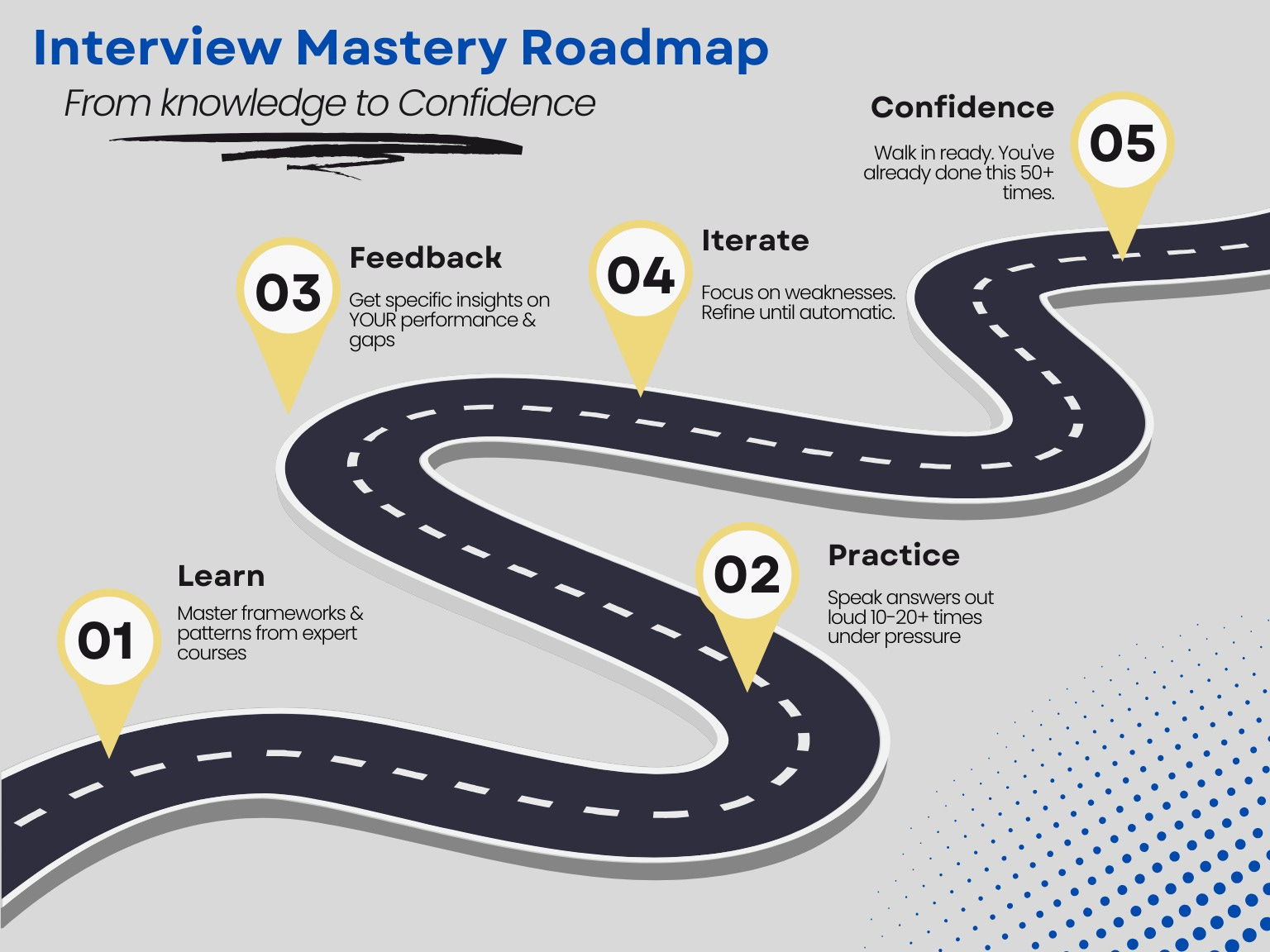
The Complete Path:
Learn frameworks from courses like Big Tech Careers → Practice applying them with Revarta → Get feedback on YOUR execution → Iterate until automatic → Walk into interviews confident because you’ve already done it 50 times.
All four ingredients. Complete preparation.
The Science Is Clear
Derek Muller’s research is unambiguous: “Repeated attempts with timely feedback in a valid environment are essential for expertise development.”
Experience alone does not guarantee expertise. The quality of the experience and the learning process matter.
You can’t read your way to interview mastery. You can’t think your way to confident performance. You need the frameworks. Then you need to practice them. Over and over. With feedback. Until they’re muscle memory.
That’s what separates candidates who understand interviews from candidates who ace them.
That’s what gets you hired.
I’m hosting a FREE webinar on Thursday, December 18th where I will dive deep into strategies for preparing for big tech interviews and have special offer for you to try the Revarta Platform.
I would like to extend a big thank you to Vamsi for sharing his insights with Big Tech Careers readers.
I also encourage you to follow him on LinkedIn for further insights and join the FREE webinar we both are hosting for a value packed session on interview preparation.
My friend Ashish Prajapati, has created a clear, no-stress NVIDIA certification prep program designed to get you exam-ready with confidence.
NVIDIA hardware and software are driving today’s AI boom—and getting certified is one of the fastest ways to stand out. From GPUs to CUDA to the wider NVIDIA ecosystem, these skills signal serious credibility in the job market.
As a Big Tech Careers newsletter subscriber, you’ll get a ~75% discount to help you take the next step with confidence.