

Hey, Prasad here 👋 I’m the voice behind the weekly newsletter “Big Tech Careers.”
In this week’s article, I trace how the acronym that defines “Big Tech” has quietly rewritten itself over the years — and what the latest version tells us about where careers, capital, and power are actually moving.
If you like the article, click the ❤️ icon. That helps me know you enjoy reading my content.
If you grew up dreaming of working at a “FAANG company,” I have some news: that acronym is now older than some of the products built by the companies that replaced it.
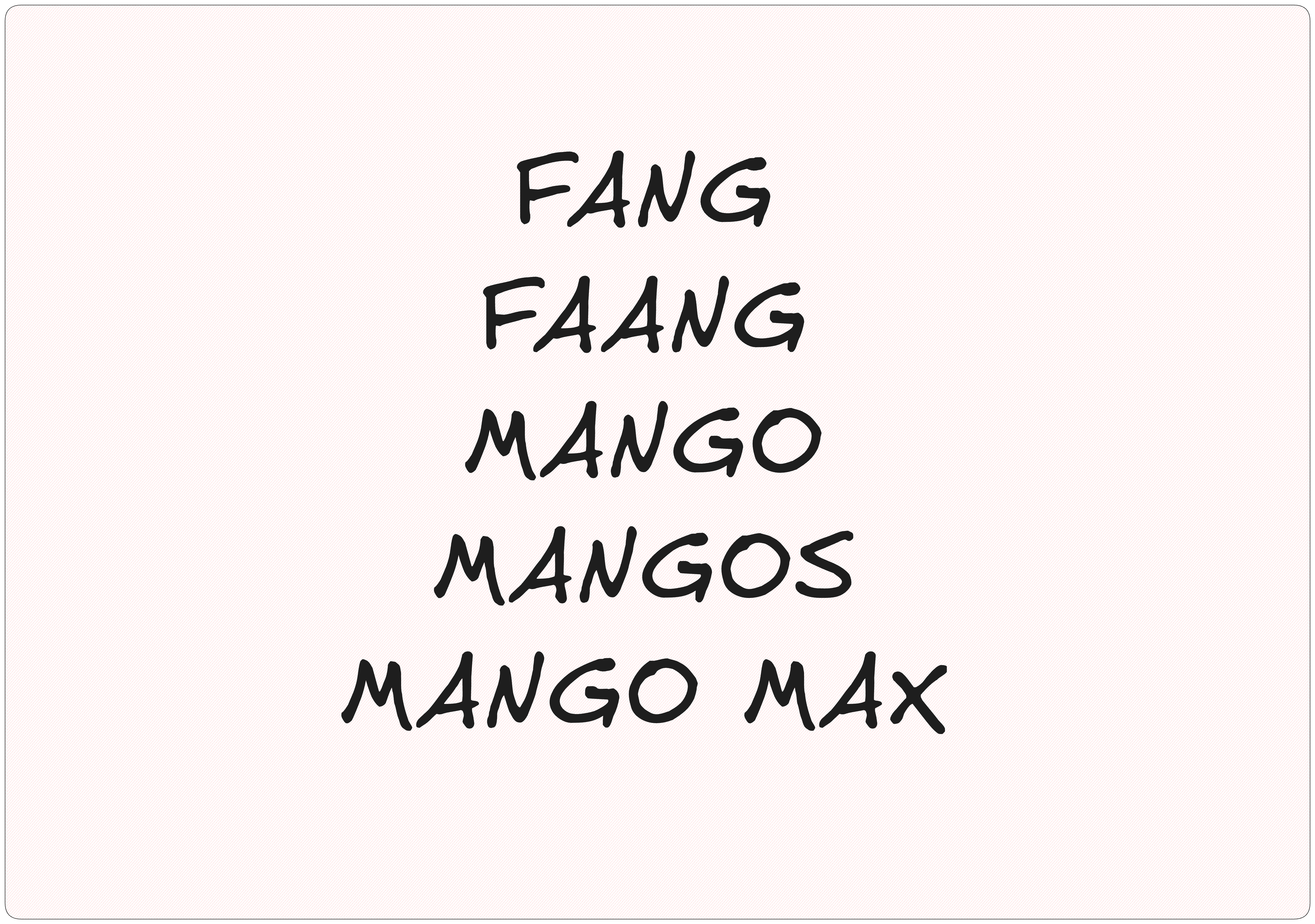
In the space of about five years, the shorthand for “the companies that define tech” has gone from FAANG, to MAMAA, to MANGO, to MANGOS — and now there’s chatter of an even bigger version floating around social media. Each rewrite is a reasonably accurate live read of where capital, talent, and power are actually rotating in the industry. So this week, I want to walk through the full lineage — where each acronym came from, why companies got added or dropped, and where this is realistically headed.
Where It All Started: FAANG (2013)
The term was coined by CNBC Mad Money host Jim Cramer in 2013, originally as the four-letter FANG — Facebook, Amazon, Netflix, Google. Infact, market technician Bob Lang is credited with originating the acronym, which Cramer then popularized to a mass television audience.
Apple wasn’t part of the original group. It was added in 2017 as its market dominance became impossible to ignore, completing the five-letter FAANG we all grew up knowing. Cramer’s framing at the time was simple: these were companies that were, in his words, completely dominant in their respective markets.
What united the original FAANG five was a business model. Social media, e-commerce, streaming, search. Companies that won by capturing and monetizing human attention.
The First Rewrite: MAMAA (2021)
The first real signal that FAANG had an expiry date came in October 2021, when Facebook rebranded to Meta. Cramer retired FAANG that same week and introduced MAMAA — Meta, Apple, Microsoft, Amazon, Alphabet — dropping Netflix entirely and adding Microsoft, which had just overtaken Apple as the world’s most valuable company.
MAMAA never fully entered the cultural lexicon the way FAANG did — but it mattered for one reason: it proved the acronym wasn’t sacred. If the underlying companies changed enough, even the term’s own inventor was willing to scrap it and start over.
The Real Shift: MANGO and MANGOS (2025–2026)
This is where it gets interesting and where the story has moved fast enough that most career content hasn’t caught up yet.
The early, quieter version (2025). Before this went viral, the acronym was already circulating in analyst circles. BofA analyst Vivek Arya originally coined a similar acronym for a basket of semiconductor companies, and analyst Stirling Larkin repurposed the letters in 2025 to describe an AI-era grouping of Microsoft, Anthropic, Nvidia, Google, and OpenAI. It got some pickup — Axios covered it in October 2025, and venture investors discussed it on CNBC — but it stayed mostly within finance and VC circles.
The viral moment (June 2026). That changed fast. Software engineer Krishna B. posted a graphic on X on June 8, 2026, declaring “It’s not FAANG anymore. It’s MANGO” — built around Meta, Anthropic, Nvidia, Google, and OpenAI. The post didn’t just get noticed — it crossed 20,000 likes within 24 hours and was picked up by mainstream financial media almost immediately.
Why this exact moment. Timing is everything here. Both OpenAI and Anthropic filed confidential S-1 paperwork with the SEC, targeting public listings within the year — and that filing news is widely credited with turbocharging how fast the acronym spread. SpaceX was moving in parallel — its own IPO, one of the largest in history, began trading the same week the acronym went viral, which is what pushed people to extend MANGO into the six-letter MANGOS by adding SpaceX.
The logic behind the list. This isn’t a random collection of hot stocks. Nearly every MANGOS company is building infrastructure that other businesses pay to run on — Nvidia supplies the chips, Google and Meta build AI systems enterprises embed in their own products, OpenAI and Anthropic sell API access developers build on top of, and SpaceX’s Starlink provides connectivity infrastructure for industries broadband can’t reach. Combined, the group represents roughly $14 trillion in public market value and private valuations.
Why Amazon and Netflix got cut. This is the part that should sting if you’re targeting a “FAANG career.” Both companies “remain powerful,” but e-commerce and streaming look less groundbreaking than AI right now — and more importantly, neither Amazon nor Netflix owns a frontier AI model, which the report calls disqualifying in a list built specifically around control of the AI stack.
And Now: “MANGO MAX”
I’ve seen variations of an eight-company extension circulating on social media — sometimes labeled “MANGO MAX” — that builds on MANGO by folding in Microsoft, Amazon, and xAI/SpaceX:
Microsoft, Anthropic, Nvidia, Google, OpenAI, Meta, Amazon, and xAI/SpaceX.
Take the label itself with a grain of salt — it hasn’t been picked up by major outlets the way MANGOS has. But the logic behind each addition is grounded in real, verifiable developments, which is probably why this extended version is circulating.
Interestingly, the appetite for a bigger basket isn’t just social media chatter. Asset managers Yorkville America and Corgi Securities have already filed with the SEC to launch competing MANGOS-tracking ETFs — Yorkville’s version, called “Mango Plus,” explicitly extends the core six stocks with seven additional companies it calls the “Parabolic 7”. Whatever you call the eight-or-more company version, Wall Street’s product pipeline suggests the idea of an extended list is being taken seriously — even if “MANGO MAX” specifically hasn’t been adopted as the official name yet.
What This Pattern Actually Tells You
Step back from the cute fruit-based branding for a second, and the pattern itself is the real insight.
FANG → FAANG → MAMAA → MANGO → MANGOS → (possibly) MANGO MAX isn’t just Wall Street having fun with acronyms. It’s a fast-forward replay of where capital and talent attention are rotating, updated almost in real time. Two things stand out:
1. The list now includes private companies for the first time. No previous Wall Street acronym — not FAANG, not MAMAA, not Magnificent Seven — included companies that weren’t publicly tradable. MANGOS broke that rule with Anthropic, OpenAI, and (until recently) SpaceX, all private at the time the acronym took off. That alone tells you how much investor and career attention has shifted toward companies before they’ve even reached the public market.
2. The selection criteria changed from “attention” to “AI infrastructure.” FAANG companies won by capturing consumer time. MANGOS companies win by being the layer other businesses build on top of — chips, models, cloud, connectivity. If you’re mapping your own career trajectory, that’s a meaningfully different skillset to be building toward.
The Bottom Line
Acronyms are sticky because they’re simple. But simple isn’t the same as settled. FAANG took eight years to fully retire. MANGO took about eight months to mutate into MANGOS. Whatever comes after MANGO MAX — and something will — the underlying signal is the one worth tracking: power in tech is consolidating around infrastructure, compute, and frontier AI models, not consumer apps.
If you’re building your career with “I want to work at a FAANG company” as the goal, it might be time to update the target. The companies worth aiming for in 2026 look meaningfully different from the ones that defined 2013 — and the acronym churn itself is one of the clearest signals telling you so.
Enjoyed this article? You might also like these popular posts from Big Tech Careers:
How to Stand Out When 95,000 Tech Workers Are Job Hunting at the Same Time
How to Transition from a Developer or Architect to AI FDE Roles
The Quiet Signs Your Company Is About to Do Layoffs — And What to Do Right Now
Big Tech Interview Preparation Course
While I share everything for free here in this newsletter, if you are preparing for behavioral interviews, I have a self-paced course for you.
Check the course page for more details.
This is a fun read. Thanks Prasad!