
Think about the behavioral questions you hear in Big Tech interviews.
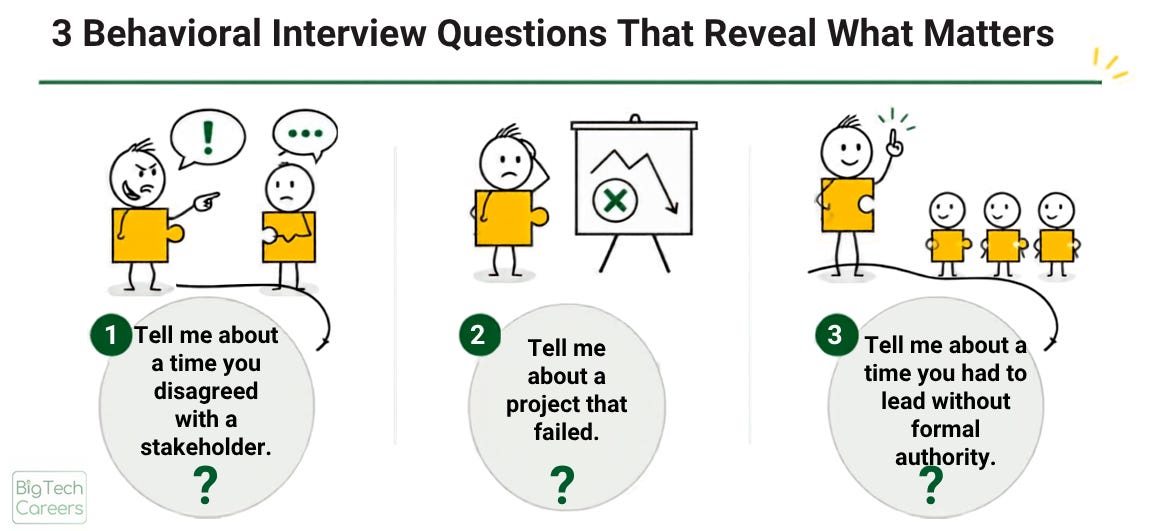
Here’s what I’ve noticed: the strongest candidates reveal something real through their stories. AI has made it easy to memorize STAR answers and coding interviews can be studied. But behavioral patterns can’t be faked. They show whether you’ve actually learned and genuinely collaborate.
That’s why interviewers now rely more on behavioral consistency. It separates candidates who sound prepared from those who actually are.
These questions take you back to situations that have already happened because a real experience gives the interviewer something concrete to examine. They can look at the decision you made, how you worked with other people, what you personally did, and what happened afterward.
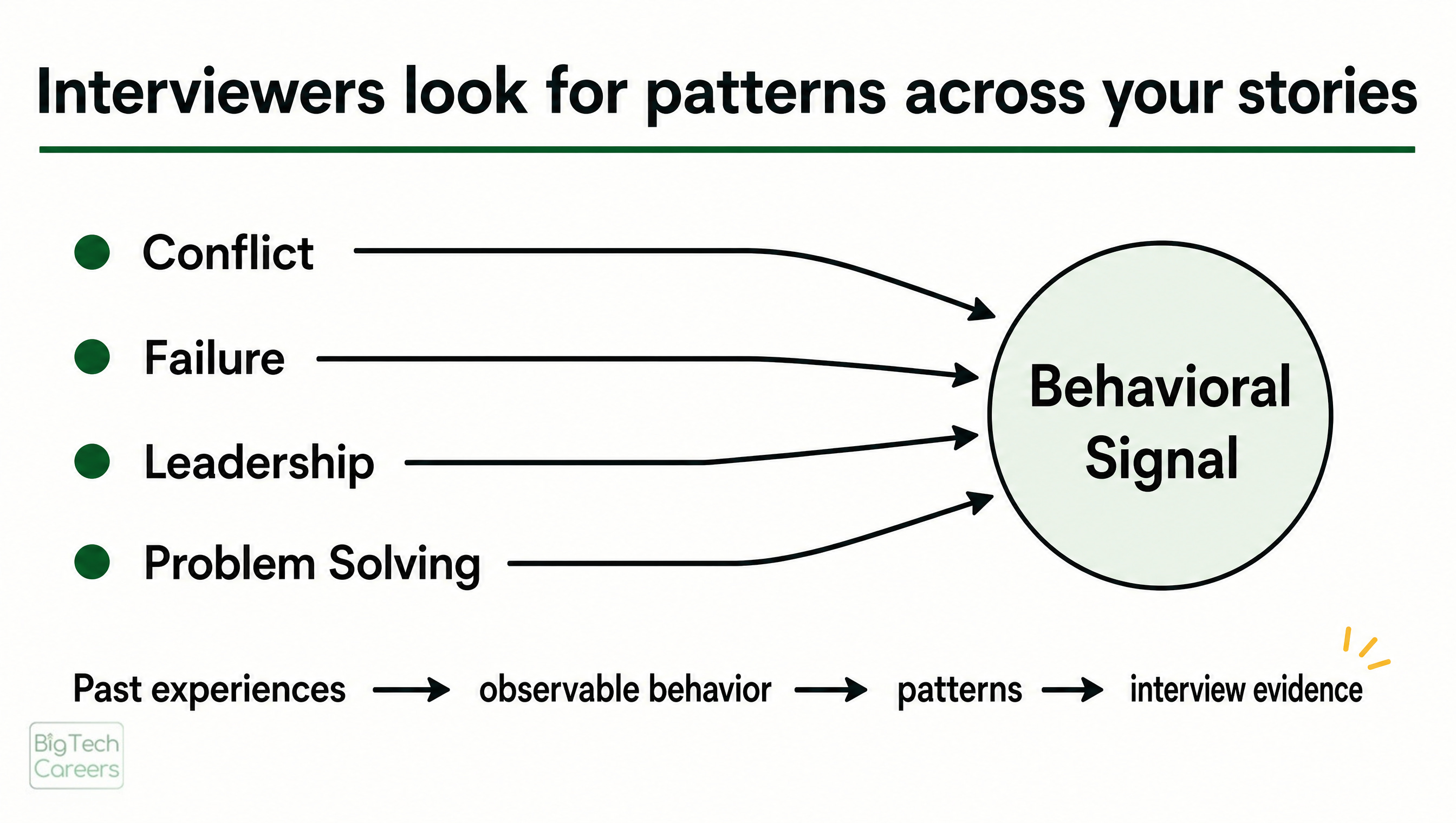
This idea is often described as behavioral consistency. Your past experiences give interviewers evidence of how you have handled similar situations before, and across several answers, they can start to see patterns in how you operate.
Preparing for a Big Tech interview?
I spend more time on helping participants choose, structure, and practice these stories inside the cohort. The same approach applies across Big Tech roles because every role requires candidates to explain their decisions, collaboration, and impact.
If a more structured approach would be useful for your preparation, you can see what we cover here.
How interviewers build a pattern from your multiple stories
Suppose you share a strong conflict story. The interviewer can see how you handled one disagreement, but they are still learning about the broader way you work.
A leadership story may show how you influence people when you do not have formal authority. A failure story can reveal how you respond when your decisions do not produce the expected result, while a problem-solving story can show how you evaluate alternatives and make a decision.
Across those examples, the interviewer has more evidence to work with. They can begin to see whether qualities such as ownership, judgment, collaboration or adaptability appear consistently in your work.
This connects directly to something I covered in my previous article on the three types of stories you should prepare before a Big Tech interview.
In that article, I talked about three types of stories: your Elevator Pitch, your Technical Stories, and your Past Experience / STAR Stories. I also shared the eight behavioral themes I use to build a stronger story bank.
The important part is building a story bank with enough relevant experiences. You need different examples that allow you to answer different questions naturally.
Behavioral consistency includes showing growth through your experiences
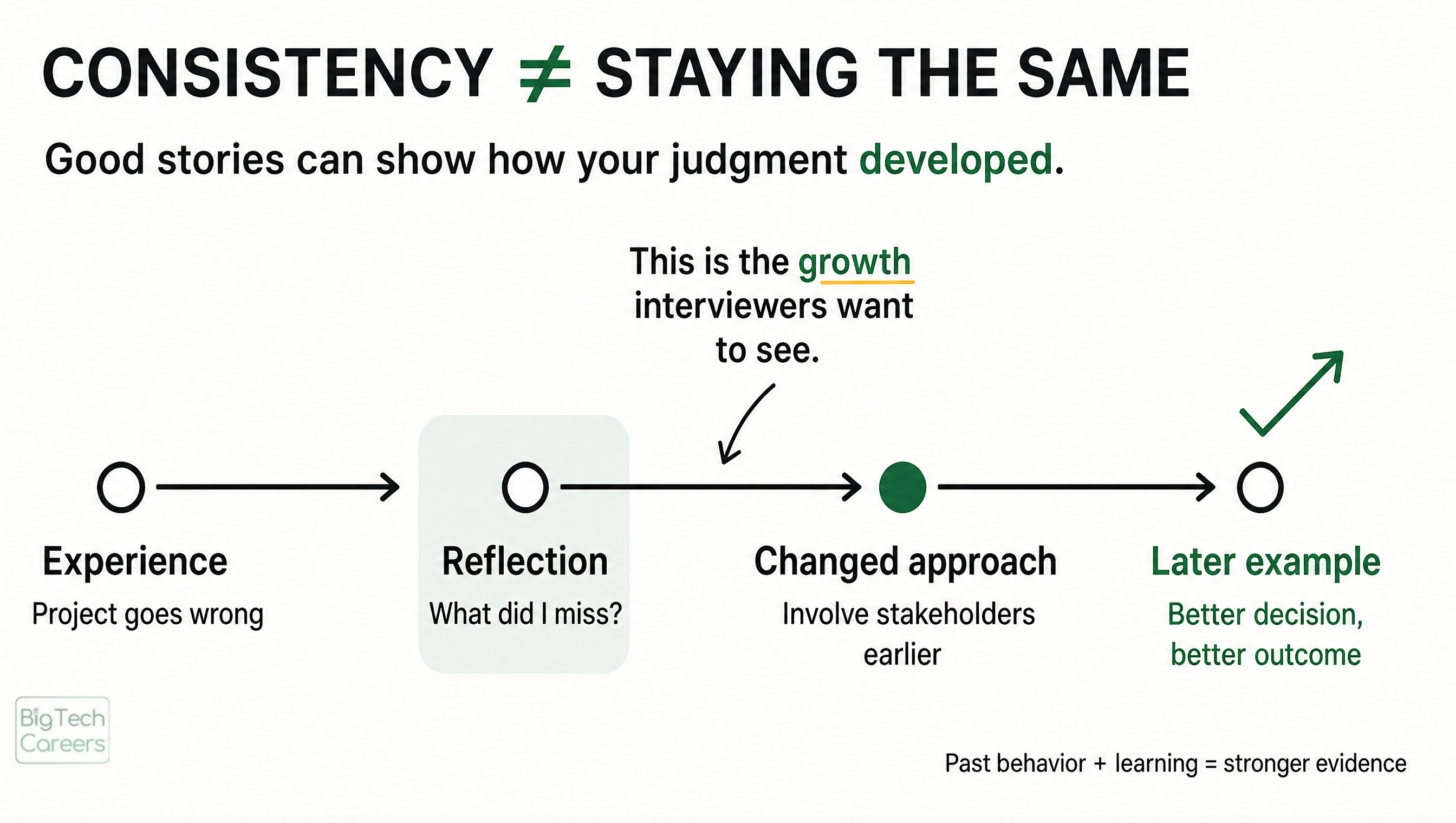
Behavioral consistency does not mean that every story should show you responding in exactly the same way throughout your career. Your experience should change how you work.
An earlier project might have taught you to involve stakeholders sooner. A difficult customer situation may have changed how you gather requirements, while a failed initiative may have changed the way you identify risks before execution begins.
A useful interview story can therefore show both what you did and what the experience changed. Later examples give the interviewer a chance to see whether you actually applied what you learned.
Build a Story Bank Strong Enough for Interviewer Follow-Ups
Start with experiences you genuinely know well. You should remember the situation, who was involved, the constraints you were working with and the decisions you made. When an interviewer starts probing, those details become important.
Use STAR to organize the answer. Situation and Task establish the context, Action should make your own decisions and contribution visible, and Result should show what changed because of what you did.
Prepare more than one strong example. The same behavioral skill may appear in several questions, and a deeper story bank gives you room to choose the experience that actually fits the question.
Prepare for follow-up questions. An interviewer may ask why you chose one option, what alternatives you considered, whether someone disagreed, what you learned or what you would do differently today. Your preparation should go deep enough that those follow-up questions feel natural.
STAR remains the structure across Prasad’s behavioral templates, while the details change depending on the theme being tested. The three-part series covers Customer/User Focus, Success, Failure, Conflict, Problem-Solving, Learning/Growth Mindset, Leadership and Time Management.
How ready is your current story bank?
Take one behavioral theme you expect to be tested on and try a simple check.
Can you identify a real experience quickly? Can you structure it using STAR, explain your individual contribution and answer a deeper follow-up without searching for details?
Then run the same check across the other behavioral themes.
That is where gaps usually become easier to see.
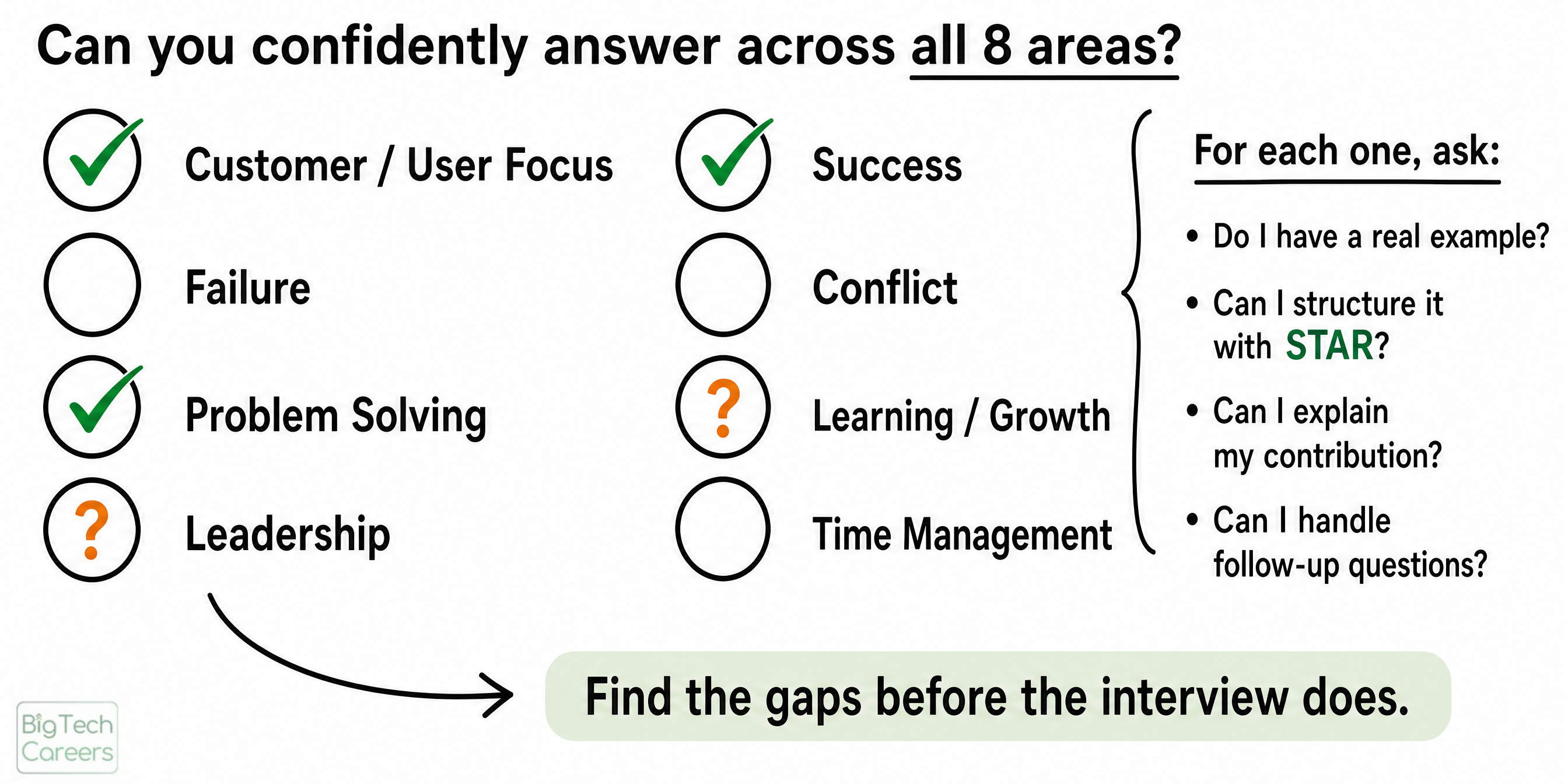
Free Resource: Big Tech Behavioral Interview Story Questionnaire
I have put together a short Big Tech Behavioral Interview Story Questionnaire based on the same eight behavioral story categories and STAR templates I have shared across previous newsletter.
The questions are designed to help you identify which parts of your story bank are already prepared and which areas need more work before your next interview.
The goal is to leave with something specific to work on.
If Leadership is an area you need to strengthen, you will know which stories to develop next. If Failure is an area where you need more preparation, you can focus on building stronger examples.
I’ll share more on how to strengthen these stories in the coming newsletters.
See you next Thursday,
Prasad Rao
Hey, Prasad here. I’m the voice behind the weekly newsletter Big Tech Careers. I share practical strategies for Big Tech interviews, behavioral storytelling, technical careers, and professional growth every Thursday